Health
Everything You Need to Know About the Updated Covid-19 Boosters
The CDC has signed off on new Omicron-specific Pfizer and Moderna shots.

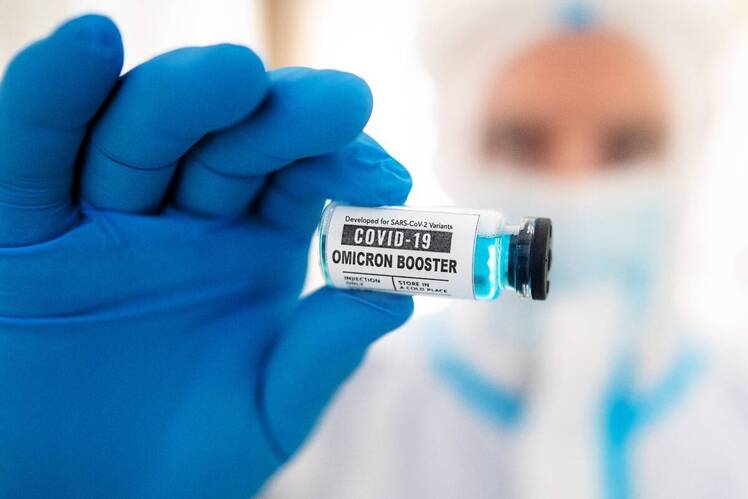
Yesterday, the US Centers for Disease Control and Prevention (CDC) signed off on updated Covid-19 vaccine boosters from both Pfizer/BioNTech and Moderna. Pharmaceutical manufacturers began shipping the new doses after the US Food and Drug Administration (FDA) authorized them earlier this week.
Currently, more than 5,000 Americans per day are hospitalized with COVID-19 and approximately 400 die. With fall and winter approaching, health officials anticipate another surge of infections. The new shots aim to prevent that by boosting our waning immunity. Here’s what you need to know.
How is this booster different from previous shots?
The new boosters are identical to previous shots, except that some of the original vaccine has been replaced with vaccine targeting the most recent COVID variants. These boosters are specifically formulated to protect against the BA.4 and BA.5 Omicron subvariants, strains that now dominate both the US and the world and are proving more contagious than the virus’ previous iterations.
The boosters will also help to restore protection that has waned since people’s most recent vaccinations. (Typical post-vaccine protection drops off significantly after about four months.) The new formulations do not replace shots for the primary series — which are necessary for the boosters to be effective — but they do renew a degree of security against the virus.
The boosters were tested on mice, a time-saving strategy that is not uncommon among vaccines; updates to annual flu shots are also approved each year without additional human trials. CDC director Dr. Rochelle Walensky says that, based on the data assessed thus far, health authorities are confident about the efficacy and safety of the new boosters.
Officials expect this uniquely targeted booster will strengthen protection against severe cases and prevent milder infections, as well as assist in guarding against long COVID, a condition in which symptoms such as chronic fatigue and brain fog can linger for months or even years.
Who is eligible for this booster?
Pfizer’s new vaccine has been authorized for people 12 and older, and Moderna’s dose has been authorized for people 18 and older. As long as you’ve completed all primary doses in your vaccine series (two shots of Pfizer or Moderna, or one shot of Johnson & Johnson), you are eligible for the updated booster.
The CDC recommends that the new boosters be given at least two months after your last dose of any Covid-19 vaccine, and up to three months after a Covid infection. People who are immunocompromised may want to get boosters more often.
About two-thirds of people in the US are already vaccinated against Covid-19, according to data from the CDC. However, less than half of those who received the initial series have also gotten a booster.
Should you get the new booster?
COVID-19 vaccines were first authorized for emergency use in the US in December 2020, and studies following their distribution showed marked protection against symptomatic infection, severe illness, and death. Subsequent studies also showed that the vaccine’s ability to protect against the virus wanes over time, and that a booster can help restore it.
The CDC recommends that people ages 50 and older get second Covid booster shots, as the BA.5 Omicron subvariant appears capable of bypassing the body’s immune system defenses. Because of this, prior infection no longer safeguards against reinfection, especially if it’s been more than 90 days since the previous illness.
According to the CDC’s forecasts, issuing these boosters to Americans in September could prevent 137,000 more hospitalizations and 9,700 deaths — as compared to rolling them out in November.
The virus has evolved in the last two years, and the symptoms of the original COVID strains — loss of smell, shortness of breath, stiffness in the chest — are not necessarily the primary indicators of infection. Possible Omicron symptoms have broadened to include sore throat, cough, fatigue, nasal congestion, runny nose, headache, muscle aches, and more.
COVID can also age your body in startling ways, so monitor symptoms, test as needed, consider wearing a mask in crowded spaces, and continue taking care of your overall health. A healthy body is a strong body!