Fashion
Plus-Size Swimsuit Model Shares Powerful Message About Inclusivity in the Age of GLP-1 Medications


Hunter McGrady is getting candid about the current state of body inclusivity amid the rise of GLP-1 drugs.
The plus-size model, who has been featured in Sports Illustrated Swimsuit, and has graced the pages of publications like Glamour, Teen Vogue and more, spoke to Yahoo in an interview published Wednesday, June 24 in which she reflected on how body image has changed with the increased use of weight loss medications.
McGrady said she first noticed “backslide” away from celebrating plus-size bodies in 2024, the same year she was featured on one of the magazine’s swimsuit covers. And while her figure was being celebrated at the time, there was a subtle shift occurring in the industry that signalled change was coming.
“The shift wasn’t loud at first. It wasn’t one headline or campaign. It was a hundred small signals where suddenly the conversation became less about inclusion and more about shrinking again,” McGrady recalled. “Quietly behind the scenes, brands started pulling sizes. They started taking away plus sizes, in-store and online. You’d go in and see less and less plus-size representation, or just representation in general. Slowly, we started seeing the same body ideals re-emerge and the same narratives being rewarded.”
The same brands that were paying her bills, McGrady said, were taking away plus sizes. It was a move she called “jarring” and “shocking.”
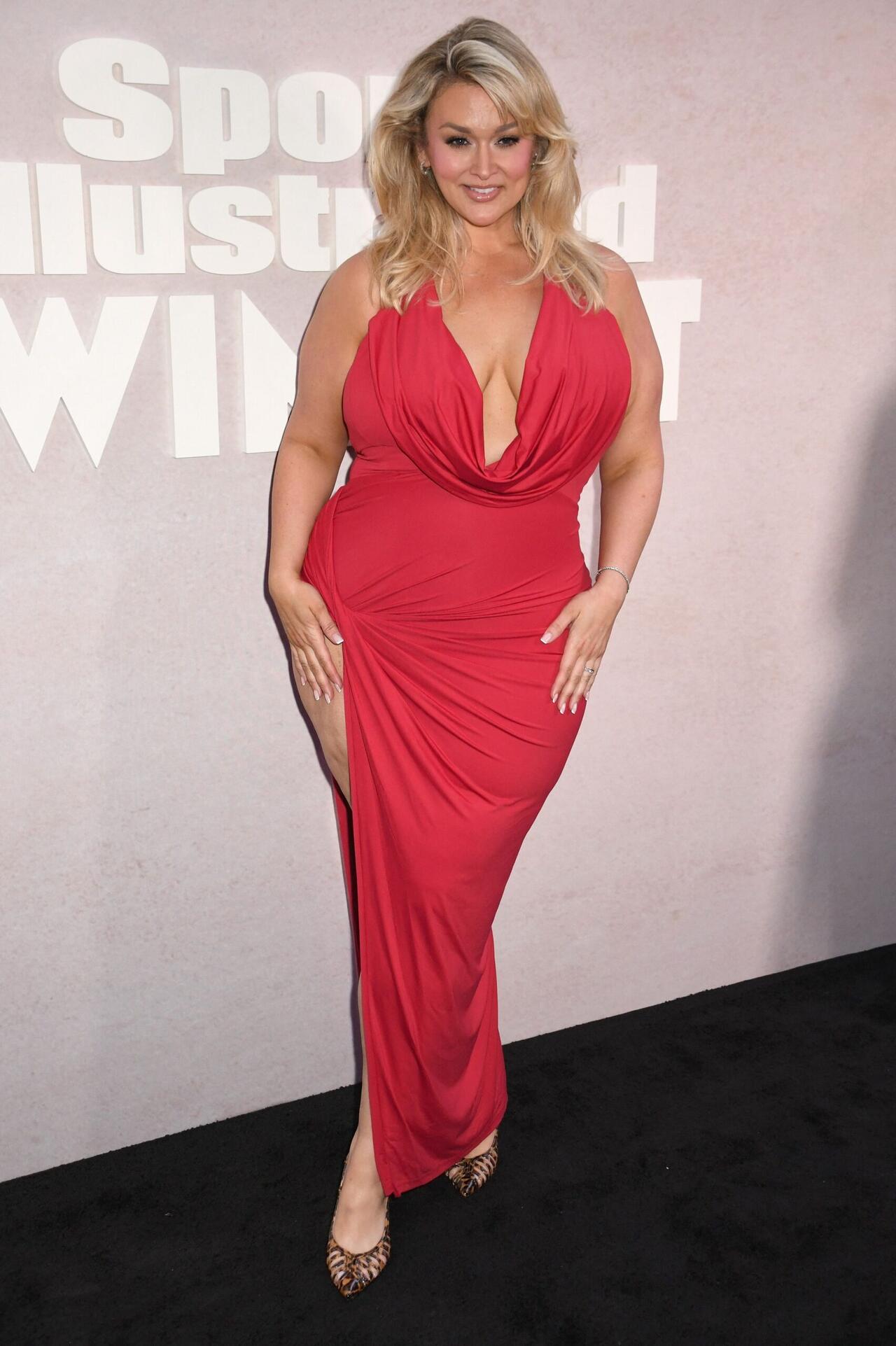
And while it’s no secret that GLP-1 medications are being used readily by celebrities and everyday people alike, McGrady said it’s not the weight loss drugs that are to blame, but rather the “cultural response” to them.
“I don’t think GLP-1s are the problem. For so many people, they’ve improved health, lowered inflammation, lowered blood pressure and changed lives. That’s worth celebrating. What concerns me is the cultural response,” she explained. “I’ve noticed the loudest applause isn’t for the improved health markers. It’s for the smaller body.”
McGrady continued, “The question I always get asked is whether people should be taking GLP-1s. To me, that’s not the question. The question is: Why, as a culture, are we so quick to equate getting smaller with getting better? Those are not always the same thing. The second we treat those things as interchangeable, we stop having a conversation about health, and we start having a conversation about body size again. That’s the issue.”
In addition to the piece, McGrady, who first appeared in Sports Illustrated Swimsuit in 2017, shared her thoughts in a post shared to Instagram last month, where she highlighted the rights of “people in larger bodies” to exist.
“The rise of GLP1s does not erase the existence of people in larger bodies. It does not suddenly make fat people unworthy of fashion, visibility, luxury, desirability, or self expression. We are still here. We have always been here. And we deserve beautiful things,” McGrady wrote. “We deserve to attend events, celebrations, red carpets, weddings, dinners, and everyday moments without the humiliation of wondering if anyone made something with our bodies in mind. I know these women exist because I AM ONE OF THEM!,” McGrady exclaimed.
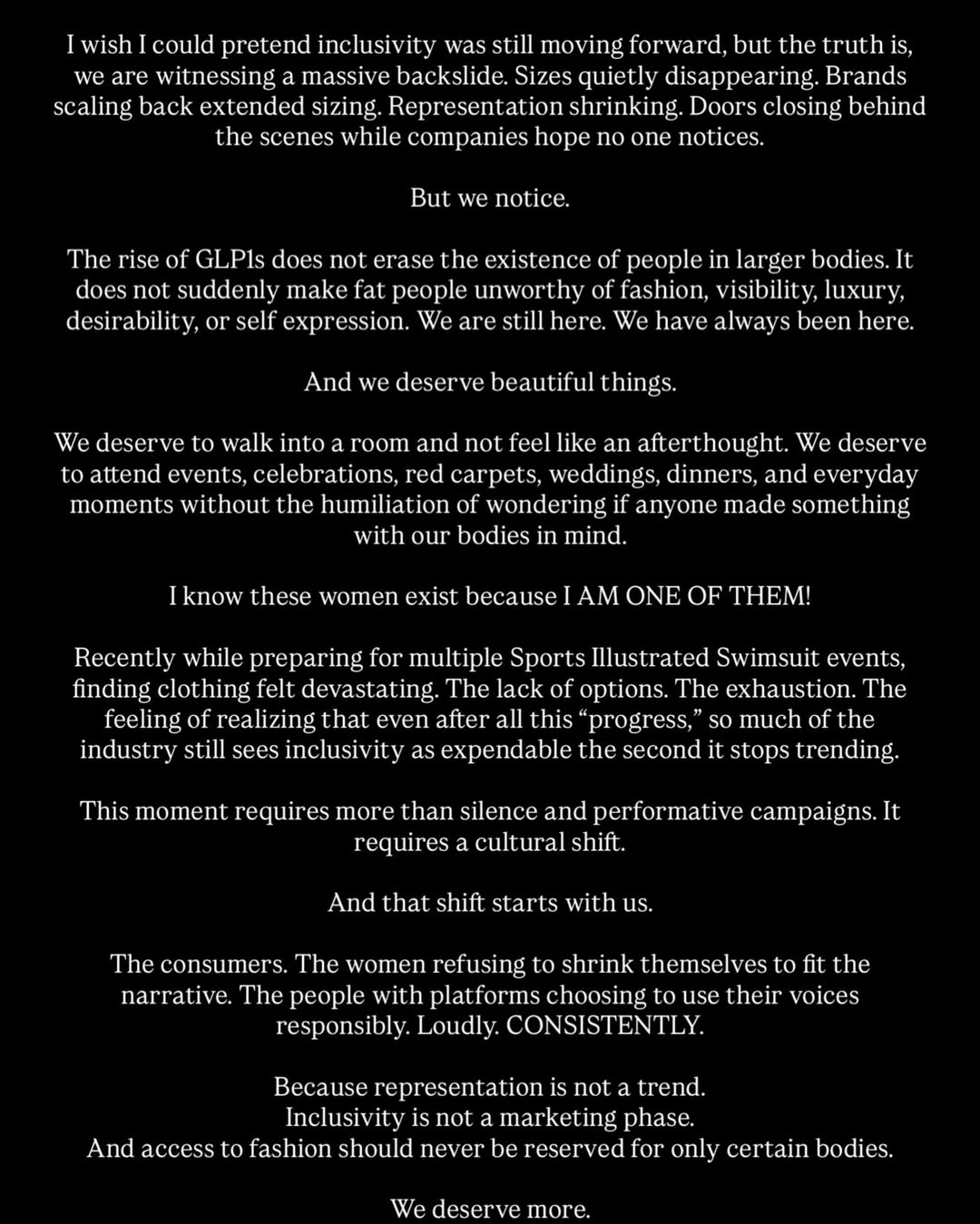
Reflecting on her recent experience preparing for events to celebrate Sports Illustrated’s latest swimsuit issue, McGrady, who shared one of her SI photos alongside the statement, said it “felt devastating” trying to find clothing that made her feel good on the red carpet.
“The lack of options. The exhaustion. The feeling of realizing that even after all this ‘progress,’ so much of the industry still sees inclusivity as expendable the second it stops trending,” she shared. “This moment requires more than silence and performative campaigns. It requires a cultural shift. And that shift starts with us.”
While the trend is shifting back towards the model-skinny look of the early 2000s, McGrady instead called on consumers to balk, and refuse to “shrink” themselves to fit fashion’s new narrative.
“Representation is not a trend. Inclusivity is not a marketing phase,” McGrady remarked, before bringing her impassioned post to an end. “And access to fashion should never be reserved for only certain bodies. We deserve more.”